

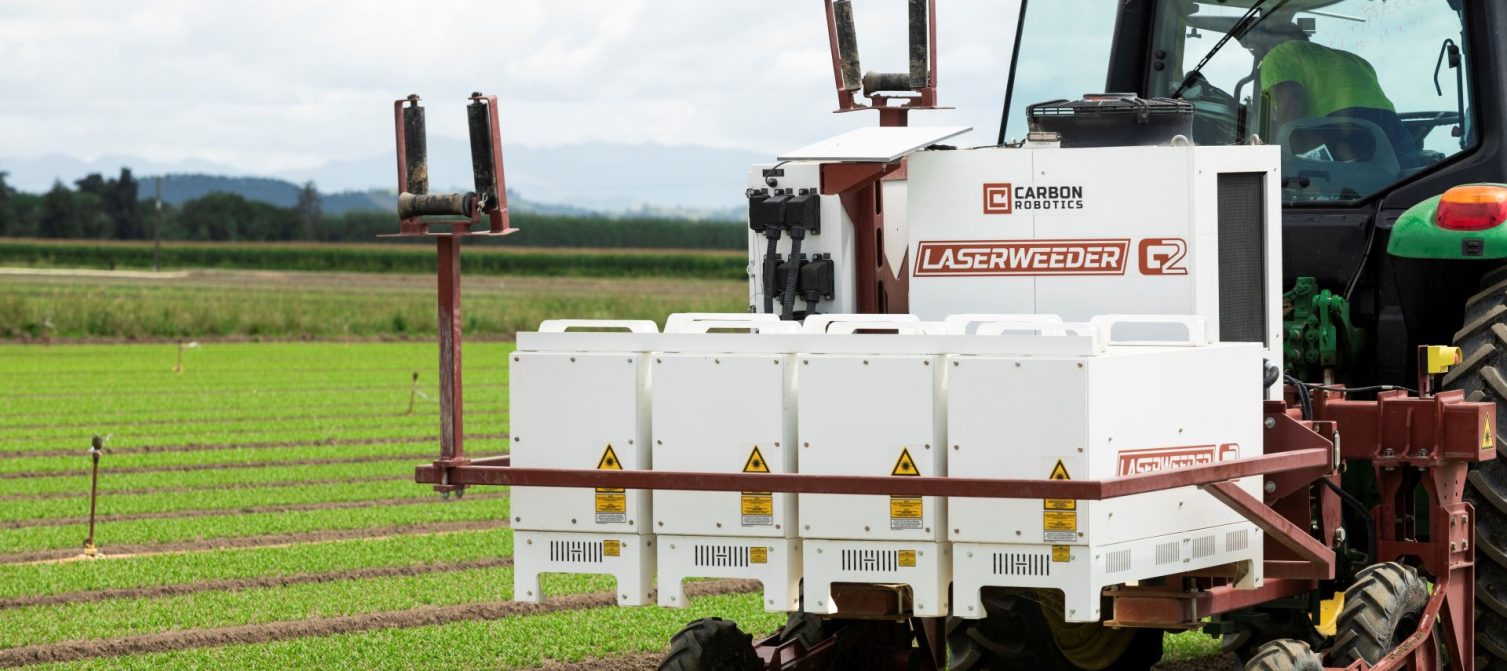
with funding support from the Ministry for Primary Industries’ Primary Sector Growth Fund, we’ve welcomed the world’s latest technology in weed control to our Gisborne farm, revolutionising the way we farm and manage weeds.
The new Carbon Robotics G2 Laser Weeder is an American innovation that uses high-resolution cameras, artificial intelligence, and laser technology. It detects and removes weeds as tiny as the top of a ballpoint pen, without disturbing the soil or impacting the crops.
This new technology will be pivotal in helping the farm reduce carbon emissions, improve soil health, increase productivity, and produce a more consistent quality of crops, which will ultimately help Kiwis have more access to affordable leafy greens.
Our General Manager of Farming, Gordon McPhail, says that reducing emissions, better soil management, as well as finding new ways to farm sustainably with cutting-edge technology is an important focus for the team.
“We’re always looking for different ways we can be more sustainable, and soil health is a key driver; this new weed management technology is another step in the right direction. This is a huge milestone for us.
“This is the first of its kind to be used on salad leaf production of this scale, here in New Zealand. We are incredibly grateful for the funding support from the Primary Sector Growth Fund that has helped make this happen. There is no doubt this technology will revolutionise the way we farm, and it’s not often that we get to say that, let alone experience it right here in Gisborne,” says McPhail.

“We’re currently facing significant weed burden issues, and that impacts our ability to produce reliable quality salad greens, both indoor and outdoor growing. Weed burden increases our cost of production; it also reduces the quality and volume of crops we can grow. It has a flow-on effect to our production facility and ultimately our customers.
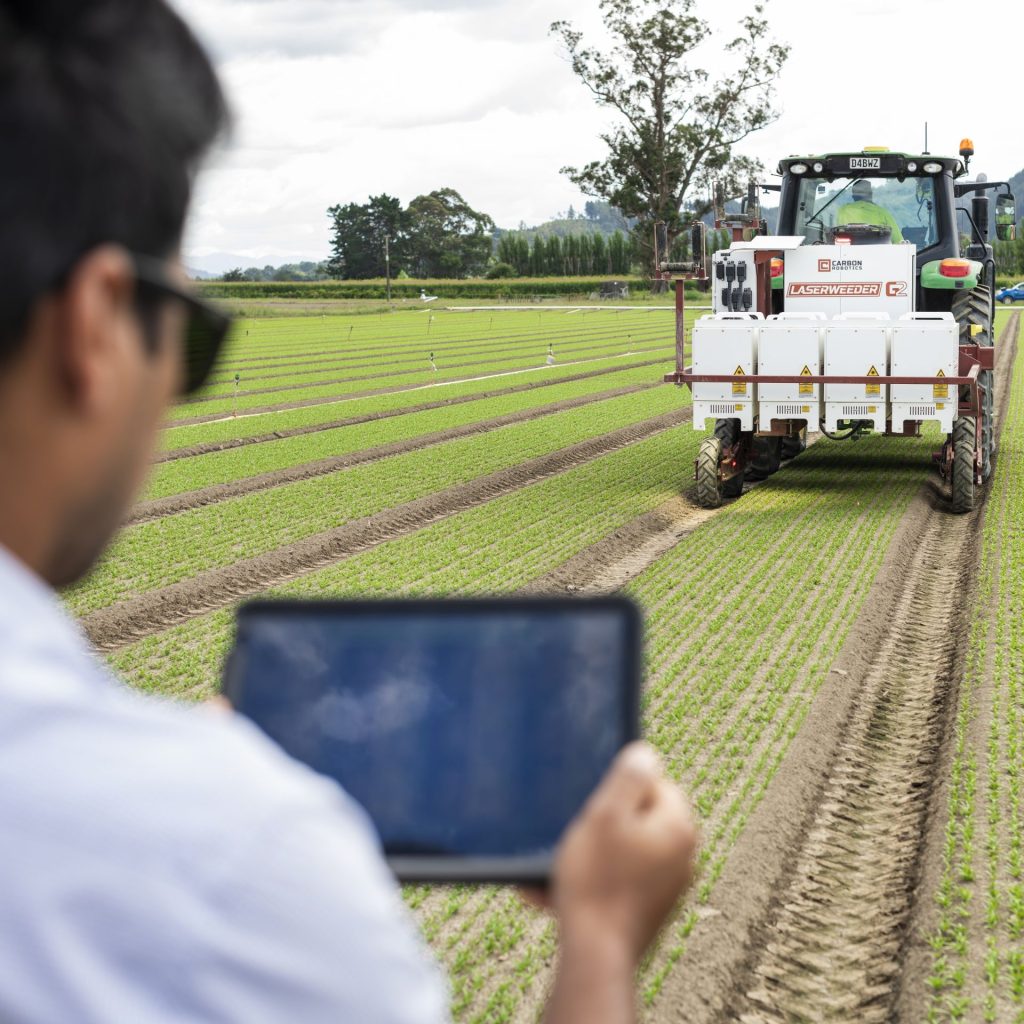
“This new weedkiller tech will significantly improve our efficiency, increase our rotations, reduce waste and lessen environmental impact. It really is a win-win for our team and Kiwi customers,” he says.
“As we embark on our own trials, we’re focused on finding what works best for our scale, crop diversity, and local conditions. Every field brings its own challenges. We’re keen to learn from what’s been done elsewhere and to add our own insights, building on the data and AI technology which we would ultimately like to share with other farmers and growers in the country.”
For us, the introduction of laser weeder technology is part of our commitment to innovation as AI technology and innovation continue to advance significantly in the farming space.
“This technology is all about creating better jobs that are less physically demanding and creating exciting new roles that will hopefully encourage more of the younger generation to get excited about farming,” says McPhail.